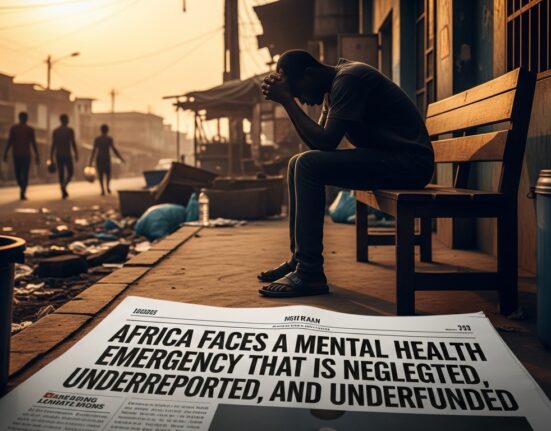
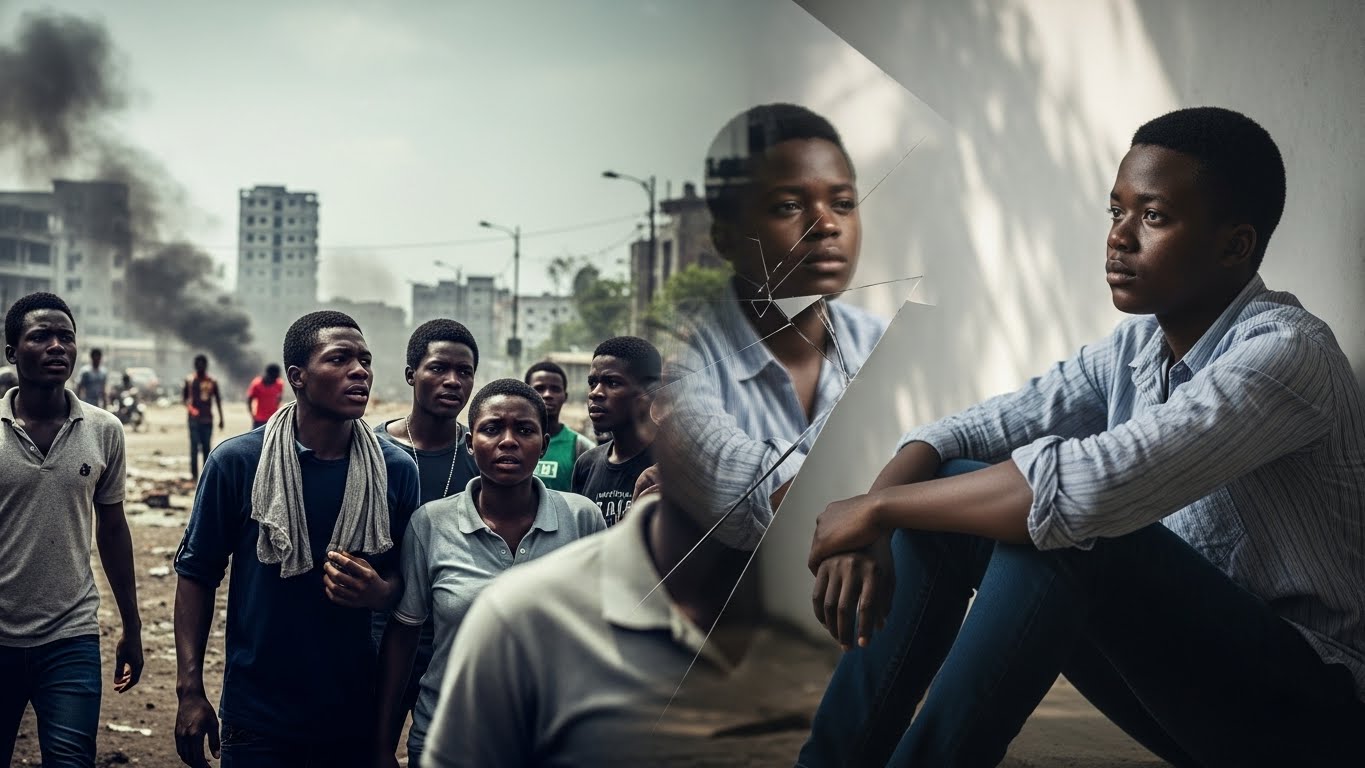
Mental health is becoming a key risk factor to Africa’s adolescent well-being and the continent’s development. While the youth below 19 make the backbone of Africa’s population — and therefore its future — many face the burden of psychological distress. A landmark study has unearthed the key drivers behind this crisis, revealing how violence and trauma are leaving lasting scars on young minds.
A growing crisis
According to World Health Organisation (WHO) data, about 4.1% of 10–14 year-olds and 5.3% of 15–19 year-olds experience anxiety disorders, while depression rates reach up to 27% in some sub-Saharan populations. Overall, one in seven children and adolescents in sub-Saharan Africa faces significant psychological challenges, and nearly 10% meet the criteria for a psychiatric diagnosis.
Key drivers of adolescent mental health problems across the continent include poverty, discrimination, violence, the effects of climate change, high rates of HIV/AIDS, adolescent pregnancies, and humanitarian crises. Together, these conditions create a hostile environment for emotional development and well-being.
The invisible epidemic
The 2021 systematic review, “The Prevalence of Mental Health Problems in Sub-Saharan Adolescents,” led by Astrid Jörns-Presentati and colleagues, identifies exposure to violence as one of the most pervasive and damaging influences on youth mental health. The review analysed 37 studies from 16 sub-Saharan African countries, documenting depression, anxiety, post-traumatic stress, and suicidal behaviour among adolescents aged 10 to 19.
From data covering more than 97,000 young people, researchers found that adolescence in Africa is often marked by trauma — with violence as a constant, destructive companion. The most frequently reported risk factors for poor mental health included being of female gender, older age, and exposure to multiple forms of violence and traumatic events.
This combination is particularly dangerous for adolescent girls. In one South African survey cited, 22.7% of female high school students reported attempting suicide within the previous six months — a stark indicator of their psychological distress and vulnerability to abuse.
Across South Africa, Uganda, and Kenya, studies consistently linked exposure to violence — physical, sexual, or emotional — to higher rates of depression, anxiety, behavioural problems, and post-traumatic stress disorder (PTSD). In Cape Town, one study found that learners exposed to the highest levels of violence were also the most likely to experience PTSD and depressive symptoms.
The evidence is overwhelming: violence is not only a social or security issue — it is a public health crisis directly undermining Africa’s mental well-being.
Burdens: poverty, disease, and loss
Violence does not act alone. The review highlights how poverty, child labour, sexual abuse, orphanhood, conflict, refugee status, and being out of school compound adolescents’ vulnerability.
Adolescents orphaned by AIDS or living with chronically ill parents are especially at risk. The researchers note, “A number of studies reported higher prevalence rates for adolescents orphaned by AIDS and living with AIDS-ill parents,” underscoring the links between parental illness and child mental health morbidity.
Silence, stigma, and a shortage of care
Despite these alarming trends, mental health remains a neglected issue across much of Africa. The study highlights a critical shortage of local research and data — with entire regions underrepresented in global evidence. In one meta-analysis, only a single Nigerian study was included, illustrating the vast research gap in low- and middle-income countries.
Cultural stigma compounds this problem. In many African societies, mental illness is treated as a hidden shame, discouraging open discussion or help-seeking. This silence is reinforced by chronic underfunding: governments spend less than $50 cents per person annually on mental health, and there are fewer than two mental health workers per 100,000 people — most of them concentrated in urban hospitals. Rural youth are left with virtually no access to support.
Way forward
The research calls for a shift from hospital-based treatment to community and school-based interventions. Programmes should reach out-of-school, displaced, and homeless adolescents, and integrate mental health into wider initiatives for poverty reduction, HIV prevention, and sexual and reproductive health.
The findings conclude that Africa’s mental health crisis demands health systems that are youth-sensitive, and prevention-focused.
Reference: Jörns-Presentati, A., Napp, A.-K., Dessauvagie, A. S., Stein, D. J., Jonker, D., Breet, E., Charles, W., Swart, R. L., Lahti, M., Suliman, S., Jansen, R., van den Heuvel, L. L., Seedat, S., & Groen, G. (2021). The prevalence of mental health problems in sub-Saharan adolescents: A systematic review. PLoS ONE, 16(5), e0251689. https://doi.org/10.1371/journal.pone.0251689